Unicamp 2022 · 2ª fase · 1º dia · Questão 09
Unicamp 2022 2ª fase, questão 9 (Biologia): regra dos 14 dias, implantação e gastrulação
Biologia · Embriologia · caderno oficial
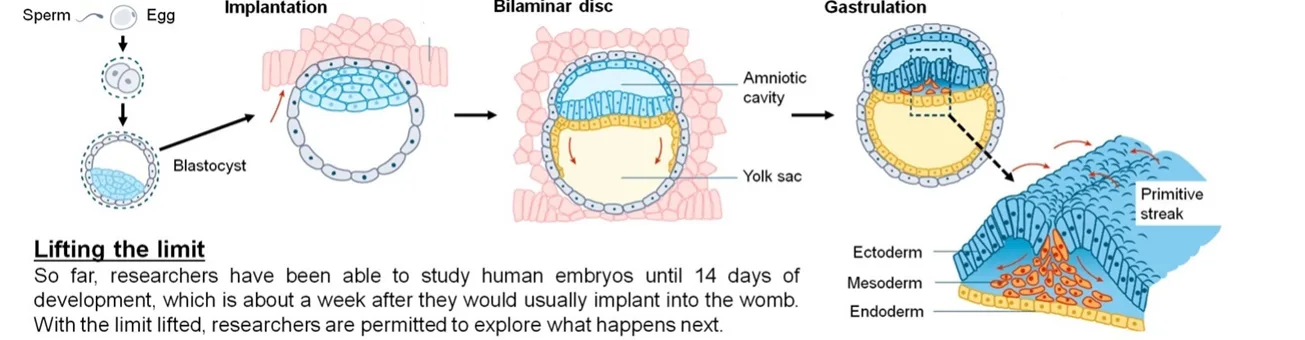
In May 2021, the International Society for Stem Cell Research released new guidelines that relaxed the 14-day rule, an international consensus that human embryos should be cultured and grown in the lab only until 14 days post-fertilization. The change allows scientists, in countries where it is legal, to seek permission to continue research beyond this point. Roughly between days 14 and 22, the embryo enters gastrulation. Studying later stages would allow scientists to better understand the nearly one-third of pregnancy losses and numerous congenital disabilities thought to be triggered at these points in development. (Adaptado de The future of lab-grown embryos, 03 set 2021; Nature News. Acessado em 16/09/2021.)
A figura mostra os estágios iniciais da embriogênese humana (implantação, disco bilaminar e gastrulação, com ectoderma, mesoderma e endoderma). Legenda: “Lifting the limit: So far, researchers have been able to study human embryos until 14 days of development, which is about a week after they would usually implant into the womb. With the limit lifted, researchers are permitted to explore what happens next.”
As respostas devem ser apresentadas em português.