Unesp 2020 · 1ª fase · Conhecimentos Gerais · Questão 27
Unesp 2020 1ª fase, questão 27 (Artes): Movimentos artísticos e vanguardas
Artes · Movimentos artísticos e vanguardas
Leia o texto sobre uma exposição no museu Tate Modern, em Londres, para responder às questões de 27 a 30.
Tate Modern – London
Hélio Oiticica
Until Summer 2019
Tropicália
Tropicália is used to describe the explosion of cultural creativity in Rio de Janeiro and São Paulo in 1968 as Brazil’s military regime tightened its grip on power.
Many of the artists, writers and musicians associated with Tropicália came of age during the 1950s in a time of intense optimism when the cultural world had been encouraged to play a central role in the creation of a democratic, socially just and modern Brazil. Nevertheless, a military coup in 1964 had brought to power a right-wing regime at odds with the concerns of left-wing artists. Tropicália became a way of exposing the contradictions of modernisation under such an authoritarian rule.
The word Tropicália comes from an installation by the artist Hélio Oiticica, who created environments that were designed to encourage the viewer’s emotional and intellectual participation. Oiticica called them “penetrables” because people were originally encouraged to enter them. They mimic the improvised, colourful dwellings in Rio de Janeiro’s favelas, or shanty towns. The lush plants and sand help to convey a sense of the tropical character of the city. When Oiticica exhibited the work, he also included live parrots.
From its beginning, Tropicália was seen as a re-articulation of Anthropophagia (“cannibalism”), an artistic ideology promoted by Oswald de Andrade.
(Hélio Oiticica. Tropicália, Penetrables PN2 “Purity is a myth” and PN3 “Imagetical”, 1966-1967.) (www.tate.org.uk. Adaptado.)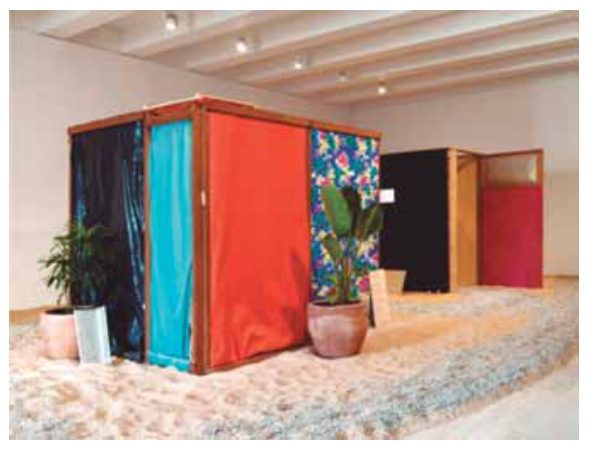
De acordo com o texto, a Tropicália
- Acongregou artistas de diversos matizes ideológicos, tanto favoráveis como contrários ao regime militar.
- Bfoi um movimento eminentemente musical, que transmitia o otimismo da década de 1950.
- Cfoi um movimento artístico-cultural que se apropriou do ideário da Antropofagia.
- Dfoi um movimento cultural interrompido pelo regime militar.
- Eteve seu ápice incentivado pela explosão industrial nos estados do Rio de Janeiro e de São Paulo.
Ver gabarito e resolução
No app: por que cada alternativa está certa ou errada, com correção na hora. A conta é grátis.
Questão reproduzida do caderno oficial (Caderno da Prova de Conhecimentos Gerais (1ª fase) do Vestibular Unesp 2020, Fundação Vunesp.). Gabarito oficial da banca; resolução do No Gabarito.